

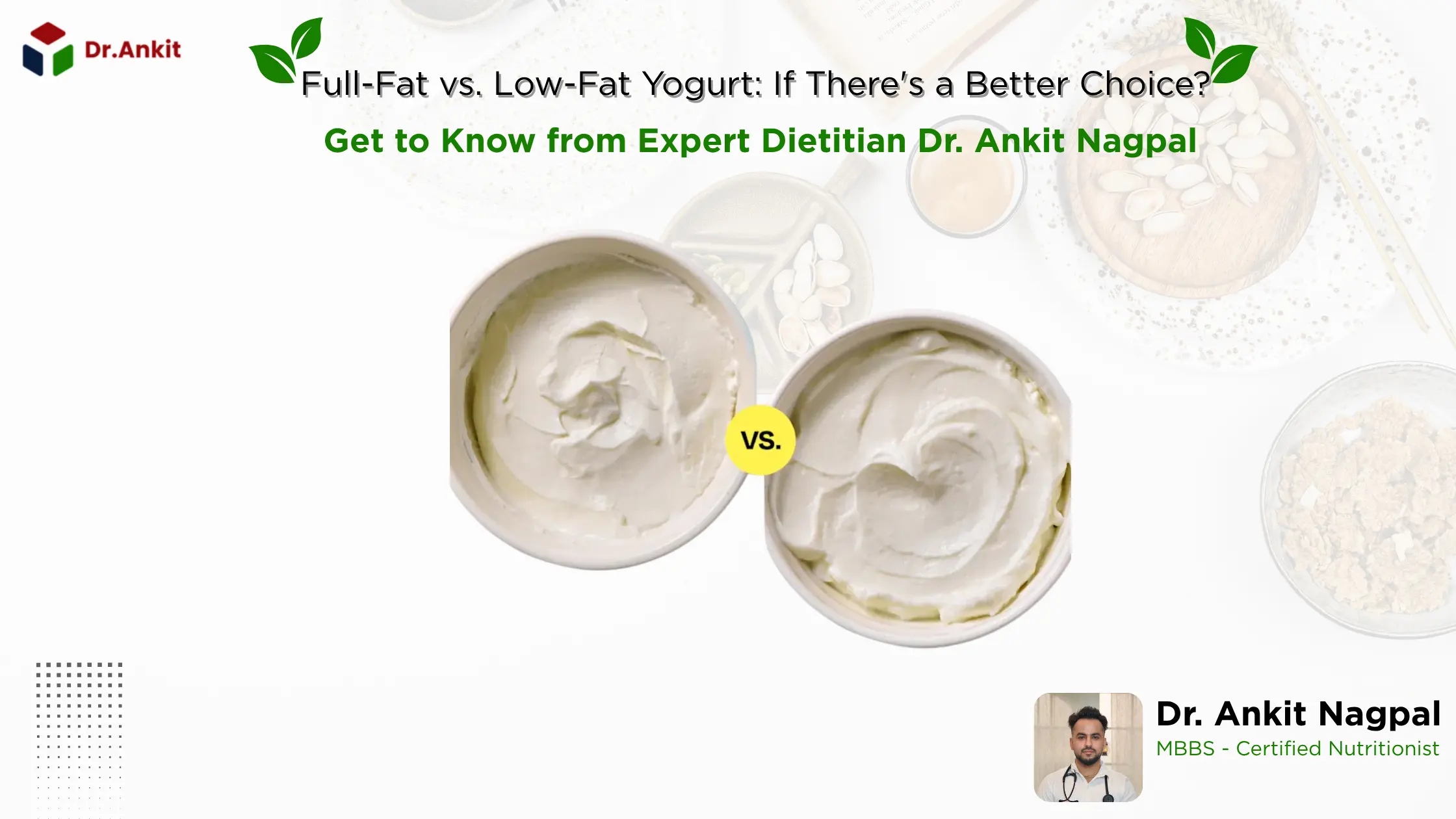
I have at least 2 types of yogurt in my fridge as I write this-one type full-fat and full-bodied, the other lighter and lower-fat, with the difference in thickness of the yogurt, hint of tanginess, that extra edge of sweetness in the low-fat kind. And I find that, rather typical.
Yogurt falls into the category of “hero foods” that are common, most often used, can be prepared fast, and are often very filling. Some days it is my breakfast base and on others it is a dip, a mixture to the make my smoothie, or a snack to simply eat from the container with a spoon.
But here’s the real question that often comes up in clinic conversations with clients:
Is full fat yogurt best, or is low fat good for you?
To get a little more clarity we asked top specialist dietitian Dr. Ankit Nagpal, who explains it in a naive yet realistic tone.
Full-Fat vs. Low-Fat Yogurt: What’s the Real Difference?
Full-fat yogurt and low fat yogurt appear to be two entirely different food types. One is rich and indulgent, whereas the other is light and suitable for a “diet”.
However, Dr. Ankit Nagpal argues that the protein isn’t quite as remarkable as most assume.
Both full-fat and low-fat yogurts generally contain:
- Protein
- Calcium
- Probiotics
- Natural milk sugars (lactose)
The main difference is in the fat content and in the consistency, not in the quality.
Nutrition Truth: Fat is Not the Enemy
One of the greatest misconceptions around is, “low-fat does NOT always equal healthy.
But Dr. Ankit Nagpal explains it clearly:
Fat is not bad for you if eaten in moderation- it keeps you full! And assists with absorption of nutrients.
Full-fat yogurt:
- Keeps you full for longer
- Feels more satisfying
- Supports better taste and texture
- Reduces frequent snacking
Low-fat yogurt:
- Lower in calories
- Lighter on digestion
- Good for calorie-controlled diets
- Useful in weight management plans
So instead of asking which is healthier, the better question is:
Which one fits your body and your lifestyle more?
Sugar Content: The Real Hidden Factor
This is one of the things most people overlook when trying any yogurt.
As Dr. Ankit Nagpal points out, the single biggest difference in yogurt nutrition is not fat (it’s added sugar and flavoring).
For example:
- Yogurt (pure or full fat or low fat) doesn’t have magnesium. Also, it is naturally low sugar.
- Flavored yogurt often contains a high level of added sugar
Which may taste “healthy” but possibly contain more sugar than a dessert.
Always read the label, don’t take it for granted.
Full-Fat Yogurt: When It Works Best
People often get confused about full-fat yogurts, but actually they are giving many advantages.
Best uses of full-fat yogurt:
- As a bowl of breakfast with fruits and nuts
- Use as a base for dips such as tzatziki
- In curries and creamy sauces
- To substitute for cream or mayonnaise.
- For individuals experiencing low satiety on low-fat foods
Dr. Ankit Nagpal highlights that:
Low-fat yogurt is not as filling as the full version as it takes longer to digest.
Low-Fat Yogurt: When It Makes Sense
Conversely, low-fat yogurt is “not healthier” it “does something else”.
Best uses of low-fat yogurt:
- Weight management diets
- Post-workout protein snacks
- Smoothies and shakes
- High-protein meal plans
- Calorie-conscious eating patterns
Dr. Ankit Nagpal often recommends low-fat yogurt for individuals focusing on:
Weight reduction, and a cap on caloric consumption without degrading the amount of Protein
Texture, Taste & Satisfaction Matter Too
A interesting revelation by Dr. Ankit Nagpal is that we are not only concerned with the science of nutrition, we also have to take into consideration our own behavior.
If you don’t enjoy your food:
- You won’t eat it consistently
- PrevelD So you will change back to the unhealthy options; just stick with the healthy I’llun02;s.
That’s why:
Any yogurt you love is better than the other! Whole-fat or low-fat.
Ingredient List: What You Should Actually Look For
Instead of focusing only on fat percentage, Dr. Ankit Nagpal suggests checking:
- Basic ingredient list (milk + cultures)
- Low or no added sugar
- Live active cultures (probiotics)
- Minimal preservatives or gums
Avoid yogurts with:
- High sugar syrups
- Artificial flavors
- Excess thickeners
Final Verdict: Which One is Better?
It is an art in itself. There’s no one size fits all loser is the consensus, for Dr. Ankit Nagpal!
Instead:
- Aces to have satiety, richness and satisfaction: select full-fat yogurt
- Low-fat yogurt is a good choice if calorie control or weight control is a major concern.
- If you’re looking for the most nutritious overall, go for regular yogurt (either one).
The best yogurt is the one that:
Final Thought
Yogurt’s not only a snack – it’s a versatile healthy eating option. Regular or low fat yogurts can be part of a healthy diet if selected properly.
As Dr Ankit Nagpal puts it so perfectly: “It is not about removing foods – it is about Intelligent food-balancing as per Body requirements.”
Start your Online Dietitian Consultation now and get expert guidance tailored for weight loss, diabetes, and lifestyle improvement.