

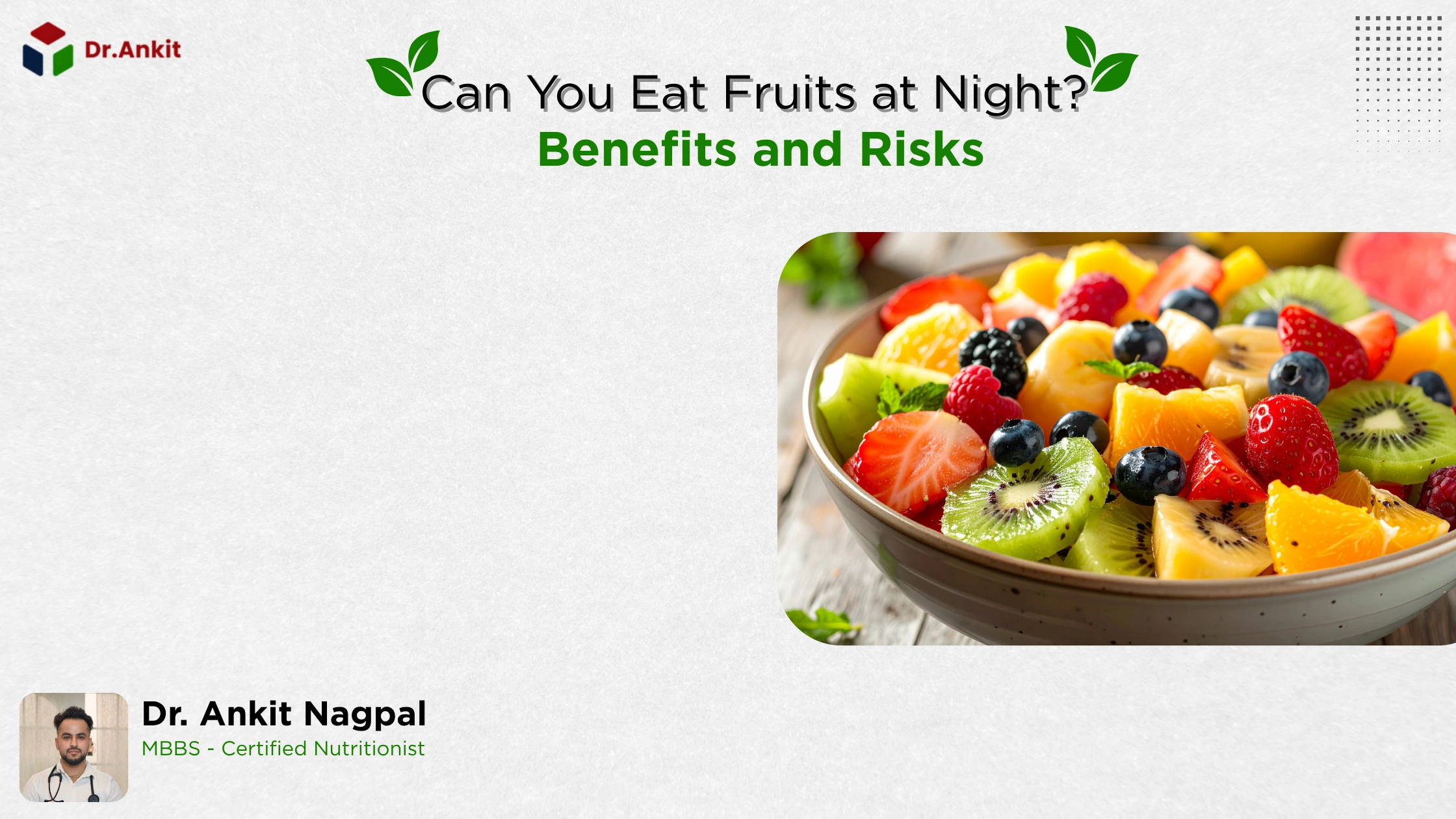
Summary
One of those things that has elicited much controversy is eating fruit at night: some people claim that it is okay, others are sure that it will make them unable to sleep or gain weight. As usual, the reality lies in the middle. This article dissects the real-life situations when you snack on fruit after the sun went down, which ones would be the better bet, and when you may want to wait. It has a variety of items that a late-night snacker can use to eat more healthily or someone who is trying to balance their diet.
Introduction
Imagine the following: 9 PM, dinner is two hours past, and you are staring at a bowl of mangoes that is on your kitchen counter. You have this small voice in your head, saying that it is bad to eat fruit at night. It is not a new thing you have likely heard, maybe it was a family member or a fitness influencer, or a well-intentioned friend who read something on the internet. However, is it really some science or is it yet another diet myth that cannot be killed?
The frank answer is: it depends. There is no doubt that fruit is one of the healthiest foods you can consume- full of vitamins, fibre, antioxidants, and natural sugars. However, the time of the day you have it, the kind of a fruit you take and your health objectives also contribute to either the evening snack benefiting or detrimenting you.
Hi, I am Dr. Ankit Nagpal, a weight loss expert based in Ludhiana, and this is one of the most common questions my patients walk in with. People often assume that anything sweet — even fruit — automatically becomes harmful after a certain hour. But that is not how the body works. In my experience, understanding your own health goals and food choices matters far more than following rigid rules about what you cannot eat at night.
Are you able to eat fruits at night? There are a lot of benefits and drawbacks on either side of this debate and by knowing them, you can make more intelligent decisions without absolutely dismissing one of the best foods that nature has to offer. Let’s get into it.
Is There a Difference in Eating Fruit at Night?
Your body does not switch to an entirely different gear when the sun goes down, but it does change gears. In the evening, your metabolism is slightly slowed-down, your insulin sensitivity is reduced, and your digestive system begins to slow down and prepare to sleep. This does not imply that it is dangerous to eat fruit at night, but it does imply that context is more important than people may think.
Fruit is a source of natural sugars (primarily fructose), fibre, water and various micronutrients. Those sugars are burnt up as energy during the day. Part of that sugar can be stored not used up at night when you are relaxing and using fewer calories. With that said, the sugar content of the majority of fruits is relatively small relative to processed snacks, and thus to an average healthy individual, the difference is not that big.
Of greater importance is the total amount of calories you consume every day, your health condition (particularly in case you have blood sugar issues), and what you would be consuming other than that fruit, probably the most important.
What Happens to Your Metabolism at Night
The evening does reduce your resting metabolic rate however, the change is not drastic. It has been observed that the rate of calorie metabolism is approximately 10 per cent slower when asleep than when awake. This implies that a small piece of fruit snack, say an apple or half a handful of berries would not lead to much fat deposition in a healthy person. The body still works on nutrients at night and the fibre in fruit actually helps this by nourishing your gut flora during the night.
The trickiness may arise where people who are insulin-resistant or dealing with diabetes are concerned. In such instances, high-glycaemic fruits (such as mangoes or ripe bananas) eaten at night may lead to a spike in blood sugar levels which are more difficult to control when insulin action in the body is less efficient. To all other people, the slowing of metabolism at night is not a big issue but rather a non-dealer.
Circadian Rhythms and Their Role in Digestion
Your body is governed by a circadian clock – a 24 hour internal clock that controls sleep, hormones, digestion and so on. The production of digestive enzymes and gut motility are both rhythmic, with the highest activity during the day and the lowest activity at night. That is why a very heavy meal just before sleep is likely to cause bloating, acid reflux, or disturbed sleep.
Fruit is relatively easy to digest (particularly when consumed on its own) and therefore will lie well in the stomach compared to heavy proteins or fatty foods during the night. But exceptionally acidic fruits – such as citrus – may cause acid burn in certain individuals when consumed late, particularly when they are susceptible to acid reflux. One minor, but significant change is selecting easily digestible, less acidic fruits in the evening.
Can You Eat Fruits at Night? Positive and Negative Assets to Be Aware Of
Here we will enter into the real matter of it. Are you able to eat fruits at night? Both benefits and risks should be given their due consideration, since there really is no black and white answer. In the case of most healthy adults, the advantages of nighttime fruit consumption are greater than the dangers of eating a snack at night especially when compared to other nighttime snacks. However, there are some actual considerations that are worth knowing, particularly in case you possess certain health objectives or circumstances.
The advantages lie in the nutritional content of fruit – the vitamins, minerals, antioxidants, and fibre that can be utilized by your body at any time of the day. The dangers are largely associated with sugar content, digestibility and personal health issues such as blood sugar regulation. We can take a closer look at each side.
The True Benefits of Eating Fruit Before Bed
Among the most underestimated advantages of night eating fruit is that you will not be tempted to have something even worse. Should it be a banana or a pack of crisps or a bowl of ice cream, the banana will prevail by far, far, far more than a pack of crisps. Fruits are rich in nutrients, naturally sweet and satisfy in such a way that junk food seldom does.
In addition to the argument based on the better than the alternative, fruit has actual benefits in the form of nighttime. Some fruit, such as cherries, and in particular tart cherries, are natural sources of melatonin, the hormone that assists in regulating sleep. Kiwis have been researched to enhance the quality and ease of sleep. Bananas are rich in tryptophan and magnesium that help in relaxation and quality of sleep. So when you are picking the right fruits, your late-night snack may actually not interfere with your sleep but rather make you sleep better.
Fibre in fruit also acts silently overnight and helps your gut microbiome, slows down digestion and helps to control blood sugar levels during the night. This will get you feeling more level in the morning as opposed to spiked and crashed.
The Top Risks You Need to Pay Attention To
The main danger of nighttime fruit consumption is not the existence of a so-called nighttime fat storage process, but, again, blood sugar levels and gut comfort. Sugar-rich fruits such as mangoes, grapes as well as ripe bananas may lead to the spike in blood sugar, and unless one is active after taking them, the spike is accompanied by a crash. This can be a real issue to individuals suffering diabetes or insulin resistance.
The other actual risk is digestive discomfort. When you eat a lot of fruit on a full stomach late at night, you may get bloated, gassy and generally uncomfortable; not necessarily because the fruit is bad at night, but because you are overtaxing a digestive system that is attempting to slow down. The remedy to this is easy: maintain moderations and have easy-digestible stuff.
Acid reflux is also worthy of mentioning, particularly among individuals who already have GERD or heartburn. Oranges and grapefruits are citrus fruits that are acidic in nature and thus cause symptoms when consumed near bedtime. Citrus at night may be the cause, if you wake in the morning with a sore throat.
Which Fruits Make Better Nighttime Snacks?
Fruits are not made equal to eat at night. Others are light, easy to digest and even sleep-promoting. Some are rich in sugar or acid that may be unpleasant or lead to blood sugar problems when consumed late. Being aware of which fruit we can eat at night will make a whole difference in the way you feel in the morning.
A general guideline would be to select fruits which have less sugar content, more fibre and are mild on the digestive tract. Fruits that contain a lot of water are also an excellent option, as they are rejuvenating, but not heavy. And, when you are trying to specifically promote sleep, there are a few fruits that have sleep-promoting effects that have been backed by evidence.
The Finest Fruits to Eat in the Evening
It is here that things become practical. The most recommended fruit snacking at night are:
- Kiwi — One of the most researched fruits to aid sleep. In a small study, consumption of two kiwis an hour before bed, led to better onset, duration and efficiency of sleep. They also contain low calories and are rich in vitamin C and fibre.
- Tart cherries — A natural source of melatonin. The Tart cherry juice has been researched to be effective in improving sleep quality among insomnias in adults. Fresh tart cherries also can be used, but they might be more difficult to locate.
- Bananas — Moderate in sugar, good in magnesium, potassium and tryptophan. The magnesium is known to relax the muscles and tryptophan is a precursor to serotonin and melatonin. Simply choose a banana a bit less ripe in case you are on your sugar level – they have lower glycaemic index.
- Berries (strawberries, blueberries, raspberries) — Low sugar, rich in antioxidants and fibre. Berries are a highly nutritious type of fruit that you can consume, and they are also stomach-friendly.
- Apples — Good source of fibre and relatively low on the glycaemic index, particularly when the skin is on. A night snack like an apple is a nice, gut-friendly, snack that will not spike your blood sugar a lot.
Fruits to Avoid Towards the End of the Day
Conversely, there are fruits that are more pleasant in the morning:
- Citrus fruits (oranges, grapefruits, lemons) — Very acidic and more apt to cause heartburn or acid reflux when consumed near bedtime.
- Mangoes and grapes — Purely rich in sugar and a greater glycaemic index. Good in moderation to most people, but not the best in those with blood sugar issues.
- Dried fruits (dates, raisins, dried apricots) — Rich in calories and extremely high in sugar. One can easily overeat without realising and this results in a massive spike in blood sugar levels before bedtime.
- Pineapple — Some individuals may experience the acid reflux because it is very acidic. It is also a high-sugar fruit and therefore huge sizes at the end of the day are not the best.
Is It Alright to Eat Fruit on an Empty Stomach at Night?
This is one of the questions that is frequently asked – may we eat fruits at night on an empty stomach? To a majority of healthy individuals, consuming fruit on an empty stomach is quite okay and in fact the way some nutritionist suggest people should consume it as it allows the food to be absorbed quicker. Nevertheless, there is a minor twist to the nighttime scenario.
When one eats fruit on an empty stomach at night the sugar is absorbed faster, and therefore may lead to a more pronounced blood sugar reaction than when one eats fruit with or after other foods. In the case of the majority of the population, it is not a problem – the reaction is rather mild. However, to a person who has diabetes or hypoglycaemia, it would be problematic to consume just a high-sugar fruit at night and on an empty stomach.
The Effect of Pairing Fruit with Other Foods
And, in case you worry about nighttime sugar, one simple way to fix it is to have your fruit with a small portion of protein or healthy fats. A handful of strawberries and a tablespoon of almond butter, or a banana with a handful of walnuts – these combinations will slow the absorption of fruit sugars and provide a more even blood sugar response.
The protein and fat also give you a feeling of fullness, so you are unlikely to get hungry again after your snack. This renders paired fruit snacks an excellent choice since individuals have the tendency to make another trip to the kitchen an hour after having snacked.
Quantity Is More Important Than Timing
Eating fruit during the night, no matter whether it is on an empty stomach or you are having something is likely the most important consideration, but the portion size. A single fruit or a small bowl of berries is quite a contrast to having half a watermelon in the middle of the night. Small portions of fruit in the night won’t cause your digestive system any trouble at all, but big portions are what give rise to bloating, nighttime discomfort, or blood sugar surges.
One medium sized piece of fruit or approximately a cup of berries is a good portion of fruit to eat at night. That will do the trick of filling a sweet tooth, give you some nutrients and not stuff your stomach right before bed.
So What Do Nutritionists Have to Say About This?
Scientific and nutrition agreement on the night time consumption of fruit is by no means as dramatic as it appears in the diet culture. The majority of registered dietitians and nutrition researchers have reached a consensus that in healthy adults, no sufficient evidence exists that consuming fruit at night leads to weight gain or other health issues provided it is included in your total calorie consumption.
The notion that carbohydrates at night cause fatness is a simplistic concept, which cannot withstand scientific examination. The content and amount of calories consumed in a day is much more important than the time of day you eat. An individual eating a caloric excess of processed diet throughout the day is in inferior metabolic condition to one eating a small amount of fruit in the night.
In the Case When the Timing Argument Is Partially Valid
Speaking of which, timing is not so important. Part of the research indicates that eating according to your circadian rhythm, that is, increasing calories in the morning and decreasing in the evening, is linked to improved metabolic performance in the long run. This does not imply that it is bad to eat fruit at night, it merely implies that in case you are maximising metabolic health, it is a sensible practice to eat as heavily as possible during the light hours of the day.
To the majority of individuals though, the practical aspect of it is that a strict no eating after X PM rule will result in deprivation, cravings and eventual unhealthy eating habits. An evening snack of a small fruit is a rather sensible element of a balanced diet.
Personal Health Conditions Alter the Equation
Individuals who have type 2 diabetes, insulin resistance, or metabolic syndrome should be more cautious with taking fruit at night. The evening decrease of insulin sensitivity implies that their body is not as well prepared to receive a sugar load even natural. In such instances, it would be advisable to talk to a doctor or dietitian about the most effective solution, which may be eating very low-sugar fruits, limiting the size of portions, or not eating fruit snacks during the last hours before bedtime. Ok Folks me Dr Ankit Nagpal, working as a dietitian Ludhiana is signing off and will connect with you all again in my future blogs till then keep reading and stay healthy.
FAQ
Not necessarily. Fruit is low in calories and high in fibre and is thus among the healthier snacks even when you are in a calorie deficit. The trick is to have portions in check and eat fruits with lower sugar content such as berries or apples instead of high sugar fruit such as mango or grapes.
It may — in both directions. Some fruits such as kiwi, tart cherries and bananas actually have compounds that help in promoting sleep. Conversely, consuming a large portion of fruit immediately before going to sleep may lead to indigestion making sleep difficult. Eat in moderation and allow at least 30-60 minutes between meals and sleep.
Good choices to have as nighttime would be kiwi, tart cherries, berries, apples and bananas. They are not very sweet (or sleep-promoting), are rich in fibre, and are easy to digest.
Timing and sugar content of fruits should be more considerate of people with diabetes. Small amounts of lower-glycaemic fruits are usually safer although it is best to seek professional advice with a healthcare provider or dietitian.
Before going to sleep, it is usually okay to have a little bit of fruit. But remember not too large or too acidic of fruits when you have a tendency to acid reflux. Preferably, have your fruit snack at least 30-60 minutes before going to sleep.
There is no likelihood that fruit by itself would make you gain weight unless it would put your total daily calorie intake in excess. Fruit is rich in nutrients but not very high in calories, so is a smarter evening snack compared to most.
Whether you want a fruit snack or not in the evening, you want to time it at least 1-2 hours after dinner and 30-60 minutes before sleep. This allows your body time to digest and the snack is not heavy to sleep.